


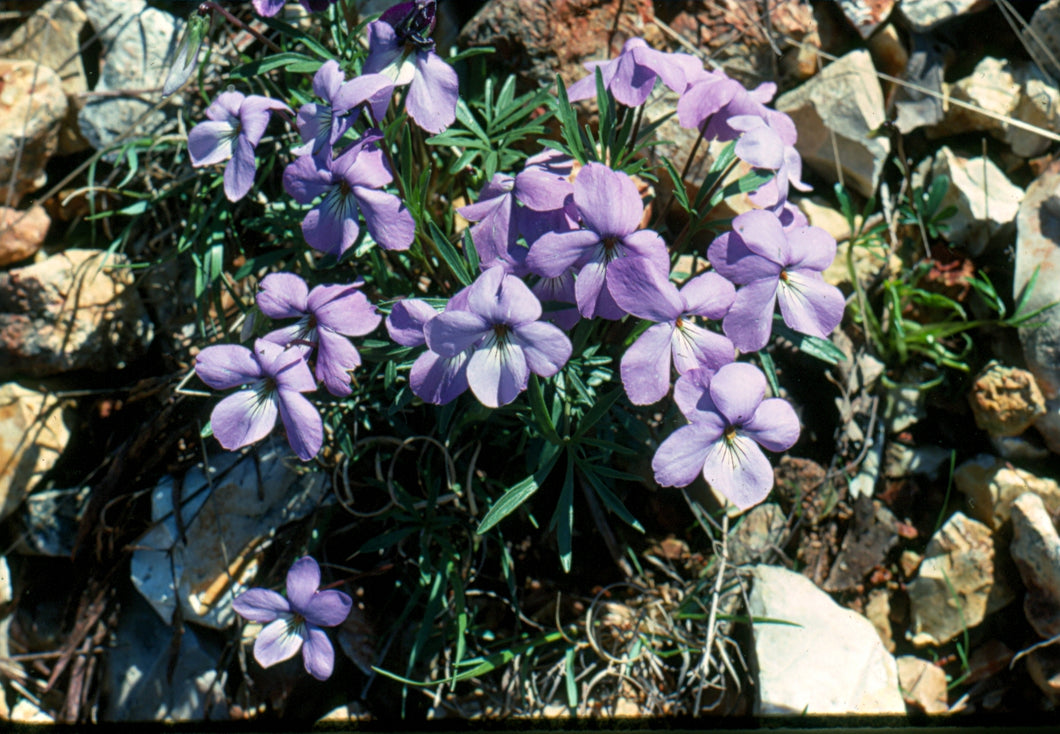


# Viola Pedata – Bird's Foot Violet
Viola pedata, commonly known as bird's foot violet, is a beautiful native wildflower admired for its distinctive, deeply divided leaves and delicate spring blooms. This charming perennial is an excellent choice for gardeners who want to add natural color to sunny borders, rock gardens, native plant landscapes, and other suitable outdoor spaces.
## Features
Bird's foot violet is native to parts of eastern and central North America. It is known for its unusual foliage, which resembles a bird's foot, and its attractive flowers that are typically pale lavender to deep violet, sometimes with contrasting markings. The plant generally forms a low-growing clump, making it suitable for smaller garden spaces and naturalistic planting designs.
## Growing and Care Guide
Viola pedata generally prefers full sun and well-drained soil. It is often found in sandy or rocky habitats and may perform well in relatively lean soils. Avoid planting it in heavy, poorly drained soil, as excessive moisture around the roots can cause problems.
Choose a location that provides good sunlight and suitable drainage. Water newly planted specimens while they establish themselves, then adjust watering to local rainfall and soil conditions. Avoid excessive fertilization, which may not suit this species' natural growing preferences.
## Garden and Landscaping Uses
Bird's foot violet can be an attractive addition to native wildflower gardens, rock gardens, sunny borders, and naturalized landscapes. Its distinctive foliage and spring flowers provide visual interest while complementing other plants suited to similar soil and sunlight conditions.
## Why Choose Viola Pedata?
Viola pedata is a rewarding option for gardeners interested in native wildflowers and distinctive perennial plants. With appropriate sunlight, drainage, and care, bird's foot violet can bring seasonal beauty and natural character to a garden.
Growing note: Flower color, flowering time, mature size, and performance vary with local climate and growing conditions. Confirm the plant's identity and regional suitability before planting.